

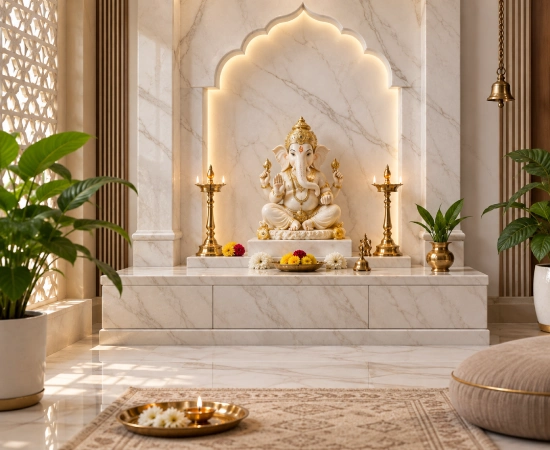
A pooja room has a different purpose from almost every other space in a home. It isn’t designed primarily to impress. It should feel peaceful, uncluttered, welcoming, and appropriate for everyday worship.
Material selection plays an important role in creating that atmosphere. Marble has long been associated with temples and sacred architecture in India, and it continues to work beautifully in contemporary home mandirs. Its natural character, cool surface, durability, and ability to take detailed carving make it suitable for everything from simple flooring to elaborate temple structures.
However, choosing marble for a pooja room shouldn’t be based on colour alone. The size of the space, intended application, maintenance, lighting, carving requirements, and overall design language all deserve consideration.
Here is how to choose marble that feels appropriate for a sacred space while remaining practical for years to come.
Why Is Marble So Well Suited to Pooja Rooms?
Marble brings a sense of permanence to an interior. Unlike temporary decorative finishes, natural stone can become part of the architecture itself.
Light-coloured marble is particularly popular in prayer spaces because it reflects light and can make compact rooms feel brighter and more open. It also provides a neutral background for idols, lamps, flowers, brass elements, woodwork, and other devotional details.
From a practical perspective, marble can be used across multiple surfaces, including:
- Floors and steps
- Mandir platforms
- Wall cladding
- Pedestals
- Decorative borders
- Carved temple elements
- Door surrounds and niches
This allows designers to create a coordinated sacred space without introducing too many competing materials.
White Marble for Mandir: Why It Remains a Classic
For many Indian homes, white marble for mandir is the natural first choice.
White creates a calm, understated background and works well with both traditional and modern interiors. It can also make a smaller pooja room appear more spacious, particularly when combined with warm lighting.
But “white marble” isn’t a single material. Different stones can vary considerably in shade, grain, veining, translucency, and overall character.
A relatively uniform white surface may suit a traditional carved mandir, while marble with expressive grey veins can work beautifully in a contemporary prayer room with simpler architectural details.
The objective should be harmony rather than selecting the brightest stone available.
Makrana Marble for a Traditional Pooja Room
Makrana marble has a strong connection with Indian architecture and craftsmanship. Quarried in Rajasthan, it is well known for its use in historic buildings, monuments, and religious spaces.
A Makrana marble pooja room can be particularly appropriate when the design includes traditional carving, pillars, arches, platforms, or decorative details.
Its classic white appearance also coordinates naturally with brass lamps, bells, wooden doors, and traditional Indian ornamentation.
For homeowners seeking an Indian natural stone with a long architectural heritage, Makrana deserves consideration.
Imported White Marble for Contemporary Mandirs
Sacred spaces don’t necessarily have to follow a traditional design language.
Modern homes often feature pooja rooms with clean lines, concealed lighting, minimal ornamentation, and carefully selected natural materials. Imported white marbles can work effectively in these settings.
Varieties such as Statuario, Carrara, and other light-toned marbles offer natural veining that can turn a simple wall into a refined backdrop.
The key is restraint. In a compact mandir, extremely bold veining may compete visually with the idols and decorative elements. A larger prayer room or feature wall can accommodate more expressive movement.
Choosing Temple Marble Flooring
Temple marble flooring should combine visual simplicity with practical performance.
A polished white floor can create a bright, refined appearance, but the finish should be selected with safety and maintenance in mind. Areas where water, flowers, oil, or other offerings may reach the floor require particular attention.
Depending on the project, a honed or less reflective finish may provide a more understated appearance and improved grip compared with a highly polished surface.
For larger temple spaces, durability and ease of maintenance become even more important because of higher foot traffic.
Before finalizing the material, consider:
Colour: Light tones create a peaceful, open appearance.
Finish: Balance visual appeal with grip and practical use.
Slab selection: Adjacent pieces should work together naturally.
Joints: A considered layout can produce a cleaner visual result.
Maintenance: Choose a stone and finish appropriate for the expected level of use.
Marble Beyond Flooring: Designing the Mandir Itself
One of marble’s advantages is its ability to move beyond the floor and become part of the actual mandir architecture.
Carved Marble Mandirs
Marble can be shaped into pillars, arches, jaali patterns, floral details, and ornamental borders. This makes it particularly suitable for homes inspired by traditional temple architecture.
The marble selected for detailed carving should be evaluated for its suitability by the fabricator or artisan, as natural stone characteristics vary.
Minimalist Marble Backdrops
For contemporary apartments, a full carved structure isn’t always necessary.
A marble-clad wall behind the deity, combined with a simple platform and warm lighting, can create a refined prayer area without making the space feel crowded.
Marble Platforms and Steps
A raised marble platform can visually define the sacred area, particularly when the pooja room is integrated into a larger living space.
Subtle edge detailing can provide character without excessive ornamentation.
Sacred Space Stone Design: Keep the Material in Balance
Good sacred space stone design isn’t about using marble everywhere simply because it is luxurious.
The pooja room should retain a sense of visual calm.
If the marble has prominent veins, keep surrounding finishes relatively simple. If you’re choosing an intricately carved mandir, a quieter floor can prevent the room from becoming visually busy.
Lighting also matters. Warm illumination can soften white stone and highlight carved details, while concealed lighting can emphasize the texture of a marble backdrop.
Natural stone should support the spiritual character of the room rather than overpower it.
Practical Considerations Before Selecting Marble
A few details can make a significant difference to the finished pooja room.
Inspect the actual stone: Natural marble varies from slab to slab. Full-size viewing provides a much better understanding than a small sample.
Consider maintenance: Oil, kumkum, flowers, incense residue, and other materials used during worship can come into contact with stone. Spills should be cleaned promptly using products suitable for natural marble.
Ask about sealing: Some marble installations may benefit from an appropriate stone sealer. Requirements depend on the specific marble, finish, and usage.
Plan before fabrication: Niches, electrical points, lamps, shelves, and carved elements should be considered before marble is cut.
Coordinate the complete palette: Marble should work naturally with the wood, brass, lighting, walls, and other materials in the room.
FAQs
Which marble is best for a pooja room?
There is no single marble that suits every mandir. Makrana is a classic option for traditional spaces, while selected white and imported marbles can complement contemporary pooja rooms. The right choice depends on design, application, maintenance, and budget.
Is white marble good for a home mandir?
Yes. White marble is widely preferred because its light, neutral appearance creates a clean and peaceful setting while complementing traditional as well as modern interiors.
Can Makrana marble be used for carved mandirs?
Makrana has a long history of use in Indian architecture and carved stonework. The specific material should still be evaluated by the artisan or fabricator for the intended detailing.
Which marble finish is suitable for temple flooring?
The choice depends on location and use. While polished marble offers a reflective appearance, honed or less glossy finishes may be considered where additional grip is desirable.
Can Italian marble be used in a pooja room?
Yes. Selected Italian marble can create elegant contemporary mandirs, feature walls, flooring, and platforms. The veining should be chosen carefully so it complements rather than dominates the sacred space.
Find Marble That Belongs in Your Sacred Space
The right marble for pooja room design isn’t necessarily the most decorative stone. It is the one that creates harmony between architecture, light, craftsmanship, and the spiritual purpose of the room.
At Adi Marble, homeowners, architects, and interior designers can explore premium marble and natural stone for pooja rooms, temple flooring, wall applications, platforms, and bespoke interior projects. Seeing the stone in person makes it easier to understand its true colour, veining, scale, and suitability for your design.
📍 Visit Us: Chintamani Park Road, Borate Vasti, Tukaram Nagar, Kharadi, Pune, Maharashtra 411014
📞 Call Us: +91-9168633149
🌐 Website: https://adimarble.in
Create a space for devotion, designed to endure. Discover natural stone at Adi Marble.