

When selecting marble for a residential or commercial project, most buyers focus on color, pattern, and finish. However, one equally important factor that is often overlooked is marble slab thickness. The thickness of a marble slab directly influences its durability, appearance, installation requirements, and long-term performance.
Whether you’re designing elegant flooring, statement walls, luxury countertops, or grand staircases, choosing the right thickness ensures your marble not only enhances the aesthetics of the space but also delivers lasting strength and functionality.
This guide explores the ideal marble slab thickness for different applications and helps homeowners, architects, interior designers, and builders make informed decisions.
Why Marble Slab Thickness Matters
Marble is a timeless natural stone known for its beauty and durability. However, every application requires a different level of support and structural performance. Selecting the correct marble slab thickness helps ensure the stone performs as expected over time.
Benefits of choosing the right marble thickness include:
- Improved structural strength
- Better resistance to cracks and damage
- Enhanced durability
- Easier installation planning
- Long-term performance
- Premium visual appeal
Selecting an unsuitable thickness can lead to installation challenges, increased maintenance requirements, and avoidable expenses.
Standard Marble Slab Thickness Options
Marble is available in a variety of thicknesses depending on the intended application. Understanding standard marble slab sizes and thicknesses helps in selecting the right material for your project.
16mm to 18mm
Typically used for wall cladding, feature walls, and decorative applications where heavy load-bearing capacity is not required.
20mm
One of the most common options for residential flooring and various interior applications due to its balance of strength and practicality.
30mm
Preferred for premium countertops, kitchen islands, staircases, and high-end architectural features where additional strength is required.
Each thickness serves a specific purpose and should be selected according to usage requirements and installation conditions.
Why Thickness Matters for Imported Marble
Premium imported marble slabs such as Statuario, Calacatta, Botticino, Volakas, Crema Marfil, and Armani Grey are available in multiple thickness options to suit different design requirements.
The appropriate thickness helps ensure:
- Better structural stability
- Consistent visual appearance
- Improved installation quality
- Enhanced longevity
- Reduced maintenance concerns
When choosing imported marble, thickness should be evaluated alongside finish, slab size, and intended application.
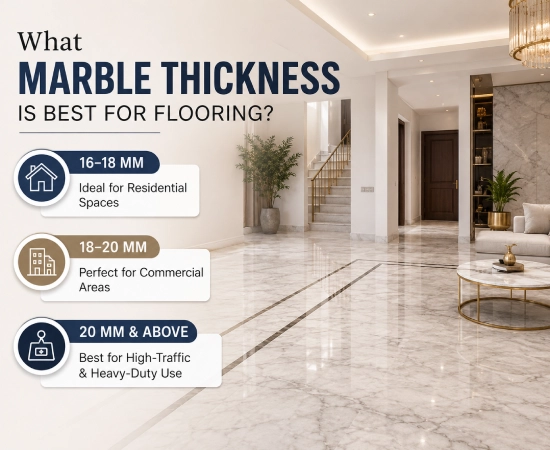
Best Marble Thickness for Flooring
Flooring is one of the most common marble applications in residential and commercial spaces. Since floors experience constant foot traffic, durability becomes a key consideration.
Recommended Thickness: 18mm to 20mm
For most projects, a marble flooring thickness of 18mm to 20mm provides an excellent balance between aesthetics, strength, and installation efficiency.
Why This Thickness Works
- Handles daily foot traffic effectively
- Offers long-term durability
- Supports large-format marble installations
- Minimizes the risk of cracking under normal use
For luxury villas, hotels, retail spaces, and commercial properties with higher traffic volumes, thicker slabs may be specified depending on project requirements.
Popular Flooring Marble Options
- Statuario Marble
- Botticino Marble
- Crema Marfil Marble
- Volakas Marble
- Armani Grey Marble
Proper subfloor preparation remains a critical part of any marble installation guide, regardless of slab thickness.
Best Marble Thickness for Wall Cladding
Marble wall cladding is widely used to create elegant feature walls, bathroom surfaces, and architectural focal points.
Since walls are not exposed to heavy loads, thinner marble sections are generally sufficient.
Recommended Thickness: 16mm to 18mm
For most interior wall applications, marble wall cladding thickness between 16mm and 18mm is ideal.
Advantages
- Reduced structural load
- Easier handling and installation
- Cost-effective material usage
- Elegant and refined appearance
Common applications include:
- Living room feature walls
- Bathroom walls
- Hotel lobbies
- Reception areas
- Decorative cladding
Using the correct natural stone thickness ensures both safety and design flexibility.
Best Marble Thickness for Countertops
Countertops require a different approach because they must withstand daily use, impact, and weight.
Recommended Thickness: 20mm to 30mm
For kitchen countertops, vanity tops, and islands, marble countertop thickness typically ranges between 20mm and 30mm.
Why Thicker Slabs Are Preferred
- Greater structural stability
- Better load-bearing capacity
- Premium appearance
- Improved durability
20mm vs 30mm Countertops
20mm Marble Countertops
- Modern and sleek appearance
- Lower overall weight
- Suitable for many residential applications
30mm Marble Countertops
- More luxurious visual appeal
- Enhanced durability
- Ideal for large kitchen islands and premium spaces
The ideal choice depends on design objectives and functional requirements.
Marble Thickness for Staircases
Marble staircases are a signature feature in luxury homes, hotels, and commercial buildings.
Recommended Thickness: 20mm to 30mm
Because stair treads experience concentrated loads and frequent usage, thicker marble slabs are generally recommended.
Benefits
- Increased durability
- Stronger edges
- Longer lifespan
- Enhanced safety
Thicker marble also contributes to the premium appearance often associated with grand staircases.
Factors That Influence Marble Thickness Selection
Choosing the right marble slab thickness involves evaluating several important factors.
Intended Application
Different surfaces experience different levels of stress. Flooring, walls, staircases, and countertops each have unique requirements.
Structural Support
The strength and condition of the underlying structure can influence thickness requirements.
Slab Size
Larger slabs may require additional thickness to maintain stability during transportation and installation.
Design Preferences
Modern interiors may favor slimmer profiles, while luxury projects often opt for thicker slabs to create a more substantial appearance.
Budget Considerations
Thicker slabs typically require more material and may increase transportation and installation costs.
Balancing these factors helps achieve the best combination of aesthetics, durability, and value.
Common Mistakes to Avoid
When selecting marble thickness, avoid these common mistakes:
Choosing Based Only on Appearance
Visual appeal is important, but performance and functionality should guide material selection.
Ignoring Installation Requirements
Different thicknesses require different installation methods and support systems.
Using Thin Marble in High-Traffic Areas
Insufficient thickness may increase the likelihood of damage over time.
Overlooking Professional Guidance
Working with experienced marble suppliers and installers can help prevent costly mistakes and ensure long-term performance.
Choosing the Right Imported Marble for Your Project
Selecting the right marble slab thickness is only one part of the decision-making process. The quality of the stone, finish, installation method, and intended use also play a significant role in the final outcome.
At Adi Marble, we offer a curated collection of premium imported marble slabs suitable for flooring, wall cladding, countertops, staircases, and luxury interior applications. Our team works closely with homeowners, architects, and designers to recommend the most suitable marble specifications for every project.
Whether you’re building a luxury residence, renovating a commercial space, or designing a bespoke interior, expert guidance can help you achieve the best results.
Frequently Asked Questions (FAQs)
What is the standard marble slab thickness?
The most commonly available marble thicknesses are 16mm, 18mm, 20mm, and 30mm, depending on the application.
What thickness is best for marble flooring?
For most residential and commercial flooring projects, 18mm to 20mm marble slabs are recommended.
Is 20mm marble suitable for countertops?
Yes. A 20mm slab offers an excellent balance of durability, aesthetics, and practicality for countertops and vanity tops.
What thickness should marble wall cladding be?
Most wall cladding applications use marble between 16mm and 18mm thick, depending on the installation method and design requirements.
Does thicker marble last longer?
Generally, thicker marble provides greater durability and improved resistance to impact, especially in high-use areas.
Conclusion
Selecting the right marble slab thickness is essential for achieving both durability and design excellence. While thinner slabs are ideal for wall cladding and decorative applications, flooring, staircases, and countertops require greater strength and support.
For most projects, 18mm to 20mm marble is well-suited for flooring, while 20mm to 30mm thickness is preferred for countertops and staircases. Understanding these recommendations helps homeowners, architects, and designers make informed decisions that balance aesthetics, functionality, and long-term performance.
By choosing the appropriate marble thickness for each application, you can ensure your investment remains elegant, durable, and timeless for years to come.
Looking for Premium Imported Marble?
Whether you’re designing a luxury home, commercial space, hotel, or architectural project, selecting the right marble is crucial to achieving a sophisticated and lasting finish.
Adi Marble offers a premium collection of imported marble, Italian marble, onyx, quartzite, and natural stone sourced from some of the world’s finest quarries.
📍 Visit Us: Chintamani Park Road, Borate Vasti, Tukaram Nagar, Kharadi, Pune, Maharashtra 411014
📞 Call Us: +91-9168633149
🌐 Website: https://adimarble.in
✨ Explore world-class marble collections and find the perfect stone for your next project with Adi Marble.