

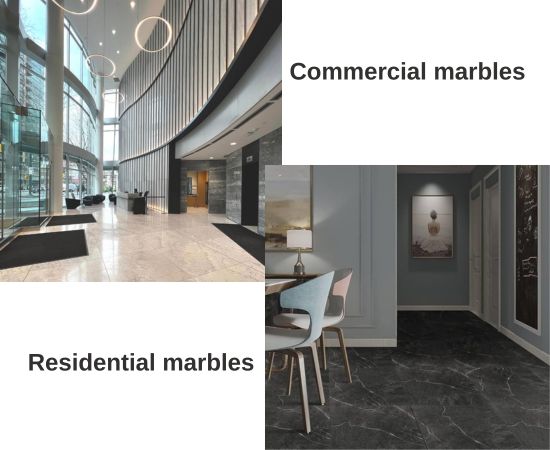
Marble has long symbolized luxury, elegance, and timeless beauty. From ancient temples to modern-day skyscrapers and homes, this natural stone continues to dominate interior and architectural design. But did you know that marble’s usage, finish, and required thickness vary significantly between commercial and residential spaces?
In this blog, we’ll explore how marble is used differently in homes versus commercial environments, why these differences matter, and how to choose the right type based on your space’s needs. Whether you’re renovating a home or designing a commercial building, understanding these differences will help you make smarter, more durable, and visually stunning choices.
Key Differences in Marble Use – Commercial vs Residential Spaces
Purpose and Usage Demands
Residential spaces prioritize aesthetics and comfort. Homeowners often choose marble for its luxurious look and feel. Since foot traffic in residential settings is relatively low, marble is selected more for its design appeal than its endurance.
Commercial spaces, by contrast, demand durability and performance. Offices, malls, hotels, and public buildings see constant foot traffic, wheeled equipment, and cleaning cycles. Here, marble must be strong, scratch-resistant, and safe underfoot.
Environment and Functionality
Marble in homes often complements interior design themes and offers cozy, inviting textures. In commercial environments, marble must withstand aggressive usage patterns, temperature fluctuations, and cleaning chemicals while maintaining its appearance.
Marble Thickness for Flooring – What’s Ideal for Each Space?
Residential Marble Thickness
For homes, marble thickness typically ranges from 16mm to 20mm. This is sufficient for:
- Living room flooring
- Kitchen and bathroom countertops
- Stair treads and wall cladding
These thinner slabs are easier to install and cost-effective without compromising visual impact.
Commercial Marble Thickness
In commercial spaces, thicker marble slabs (20mm to 30mm) are standard. This added thickness enhances:
- Structural strength
- Load-bearing capacity
- Impact resistance
Commercial marble often comes with reinforced backing to prevent cracks or breakage under stress.
Choosing the Right Marble Finish Type
Residential Finish Options
Homeowners have the flexibility to experiment with finishes that complement their décor:
- Polished: Offers a high-gloss, mirror-like shine that enhances natural veining—ideal for living rooms and hallways.
- Honed: Smooth but matte, reducing light reflection—suitable for bathrooms and kitchens.
- Tumbled: Antiqued and aged appearance—perfect for rustic or vintage home aesthetics.
Commercial Finish Options
For safety and durability in commercial zones, practical finishes are preferred:
- Flamed: Rough texture created by intense heat—used in outdoor walkways or wet zones for slip resistance.
- Brushed: Subtly textured with a worn-in feel—good for high-traffic interiors.
- Polished (treated): Used in lobbies and high-end commercial interiors but treated with anti-slip coatings.
Marble Durability Comparison – Longevity and Wear Resistance
Residential Durability Needs
In homes, marble experiences moderate wear and is typically installed in controlled environments. This allows for:
- Use of softer, exotic marble types
- Occasional resealing for protection
- Focus on visual cohesion rather than extreme resilience
Commercial Durability Requirements
Marble in commercial spaces must be highly durable due to:
- Continuous foot traffic
- Heavy furniture or rolling equipment
- Frequent cleaning and chemical exposure
Materials like granite-infused marble blends or engineered backing are often used for added longevity.
Marble Applications in Homes vs Offices
Residential Applications
- Flooring: Adds elegance to living rooms, foyers, and hallways
- Countertops: Stylish kitchen and bathroom surfaces
- Accent walls and cladding: Aesthetic visual interest in bedrooms and stairwells
- Bathroom tiles: Sleek, cool-to-touch luxury
Commercial Applications
- Lobby flooring: Grand entrances that impress clients and guests
- Reception counters: Durable yet refined focal points
- Elevator interiors & staircases: Seamless finishes that combine functionality with style
- Exterior facades: Weather-resistant, slip-proof finishes for safety and durability
Interior vs Exterior Use – Climate & Finish Considerations
Marble used outdoors must be chosen carefully to withstand environmental stress:
- Residential exteriors often feature decorative marble in gardens, patios, and walkways. Finishes like tumbled or brushed work well here.
- Commercial exteriors require flamed or textured finishes for traction, especially in rainy or cold climates.
Additionally, exposure to UV rays, rain, and pollution can dull polished surfaces. That’s why non-polished finishes are preferred outside.
Actionable Tips for Choosing the Right Marble
- Know your traffic load: High-traffic areas demand thicker, more durable marble.
- Select finish by function: Slippery polished finishes aren’t ideal for bathrooms or wet entryways.
- Plan for maintenance: Some marble types require more frequent sealing and polishing.
- Consult an expert: Always match marble type, finish, and thickness with structural and design requirements.
Conclusion
Whether you’re selecting marble for a home renovation or outfitting a commercial lobby, the differences in usage, finish, and thickness are critical. While homes offer the freedom to focus on aesthetics, commercial spaces demand practical durability without compromising style.
Understanding these distinctions ensures that your investment in marble is both visually rewarding and structurally sound. With the right selection, marble can truly elevate any space—be it a cozy living room or a bustling office atrium.
FAQs
Q1: Is thicker marble always better for high-traffic areas?
Yes. Thicker marble (20–30mm) is better suited for commercial or high-traffic zones due to its load-bearing capacity.
Q2: Which marble finish is best for commercial bathrooms?
Flamed or brushed finishes are ideal for their slip resistance and durability in wet conditions.
Q3: Can I use the same marble indoors and outdoors?
Only if the marble type and finish are suited for outdoor exposure. Avoid polished marble outdoors due to slip and weather risks.
Q4: Does polished marble get slippery in public areas?
Yes. It requires anti-slip treatments if used in public or wet areas like commercial entrances or restrooms.
Q5: How often should I reseal marble surfaces?
Residential marble should be resealed every 12–18 months. Commercial marble may need more frequent resealing due to higher wear.
✨ Elevate Your Space with Adi Marble
At Adi Marble, we don’t just supply stone—we craft experiences. With our carefully curated collection of the finest Italian marbles like Statuario, Calacatta, Botticino, and more, we help you design spaces that speak volumes.
From residential elegance to commercial grandeur, our team of experts walks with you through every step—from selection to seamless installation—ensuring your project shines with unmatched luxury and style.
📍 Visit Us:
Chintamani Park Road, Borate Vasti, Tukaram Nagar, Kharadi, Pune, Maharashtra 411014
📞 Call Us:
+91-9168633149
🌐 Explore More:
https://adimarble.in
👉 Step into a world of elegance. Step into Adi Marble.