

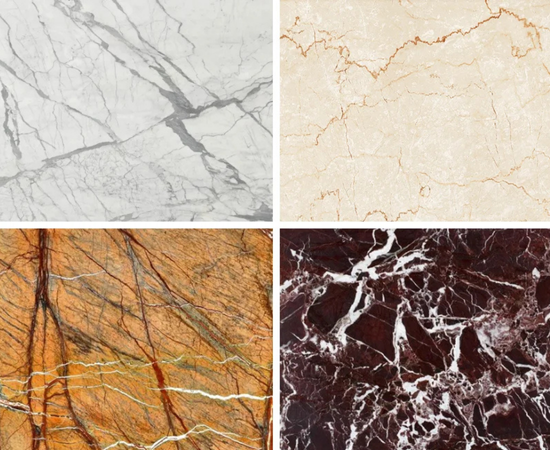
Imported Marble vs. Indian Marble: Which One Should You Choose?
The Great Marble Debate—Style or Substance?
Marble isn’t just a flooring material; it’s a statement. And when it comes to flooring options or luxe home interiors in India, marble is king. But then comes the big question—Imported or Indian marble?
Do you go for the exotic charm of Italian Carrara or Turkish Botticino? Or do you stay grounded with locally sourced Makrana, Ambaji, or Rajnagar white?
Let’s break it down in plain English—without the fluff.
Understanding the Basics: What Makes Marble “Imported” or “Indian”?
- Indian marble is quarried from regions across Rajasthan, Gujarat, and Madhya Pradesh. It’s known for its natural patterns, rich textures, and affordability.
- Imported marble is brought in from Italy, Spain, Turkey, and Greece. It’s associated with elegance, refined grains, and a polished finish.
Key Differences Between Imported and Indian Marble
Here’s a side-by-side look at the most important factors you should consider before picking your marble:
Comparison Table: Imported vs. Indian Marble
| Feature | Indian Marble | Imported Marble |
| Origin | Rajasthan, Gujarat, MP | Italy, Turkey, Spain, Greece |
| Appearance | Heavier veins, more earthy and natural textures | Subtle grains, uniform colours, luxurious finish |
| Price Range (₹/sq. ft) | ₹50 – ₹300 | ₹350 – ₹1200+ |
| Durability | High, but prone to minor discoloration over time | Highly durable, stain-resistant, with good polish |
| Maintenance | Needs periodic polishing and sealing | Requires less maintenance, stays shiny longer |
| Availability | Widely available in India | Needs to be imported; limited stock and options |
| Installation Costs | Lower | Higher (due to skilled labor and fragility) |
| Eco-Impact | Low transport impact, supports local economy | Higher carbon footprint due to import |
Pros and Cons of Indian Marble
✅ Why Choose Indian Marble?
- Affordable for large projects (ideal for entire homes or offices)
- Easy availability in Indian markets
- Great variety in colours and textures (Makrana White, Jaisalmer Yellow, Udaipur Green)
- Long-lasting with proper maintenance
❌ Where It Falls Short
- Needs regular polishing to retain shine
- Can show yellowing or stains over time
- Veining and finishing may be less refined compared to imported options
Pros and Cons of Imported Marble
✅ Why Go for Imported Marble?
- Sleek, luxurious finish ideal for high-end interiors
- More refined texture and uniform appearance
- Requires less maintenance over time
- Better stain resistance in most cases
❌ What to Watch Out For
- Expensive, both in material and installation
- Fragile during transport and handling
- Limited availability can delay projects
Which One’s Best for YOU?
Let’s make it even simpler:
- For Homes on a Budget: Go with Indian marble. It gives you timeless beauty without burning a hole in your wallet.
- For Premium Interiors & Statement Flooring: Imported marble will elevate the aesthetic, especially in foyers, lobbies, and master bathrooms.
- For Low-Maintenance Lovers: Imported is a good choice, but be ready to invest upfront.
- For Eco-Conscious Buyers: Stick to Indian marble—it supports local artisans and has a lower carbon footprint.
Expert Tips Before You Buy
- ✔️ Always buy marble from reputed dealers or certified quarries to avoid fake or low-quality slabs.
- ✔️Check porosity—the more porous the marble, the more it’ll absorb stains. Imported marble usually has lower porosity.
- ✔️ Ask for pre-polished slabs if you want to save on finishing costs.
- ✔️ Don’t skip sealing post-installation—it protects against moisture and stains.
FAQs: Imported vs. Indian Marble
Q: Is Indian marble good for flooring?
Absolutely. Indian marbles like Makrana and Ambaji are highly durable and perfect for Indian climates.
Q: Which is more expensive—imported or Indian marble?
Imported marble is significantly pricier, mainly due to transport, taxes, and finishing.
Q: Is imported marble harder than Indian marble?
Not necessarily harder, but usually denser and more refined in texture.
Q: Does Indian marble turn yellow?
Yes, over time and with poor maintenance. Regular sealing and cleaning can help prevent this.
Final Thoughts: Choose What Works for You
At the end of the day, there’s no one-size-fits-all answer. Both imported and Indian marbles bring their flair to the table. If you’re looking to make a statement, go imported. If practicality and price are top priorities, Indian marble is a win.
Whichever you choose, make sure it fits your budget, design vision, and lifestyle needs. And hey, marbles are timeless. You really can’t go wrong either way.
Get in Touch with Us Today!
Looking to transform your space with premium quality materials? Whether you’re in need of marble for your luxury interior or seeking expert consultation, Adi Corporation is here to help! We offer top-notch products and services for all your construction and interior design needs.
📍Visit Us:
S NO 72, HISSA NO 1, 69, Chintamani Park Road, Borate Vasti, Tukaram Nagar, Kharadi, Pune, Maharashtra, India.
📞Call Us Now:
+91 91686 33149
🌐Explore Our Products and Services:
https://adimarble.in/