

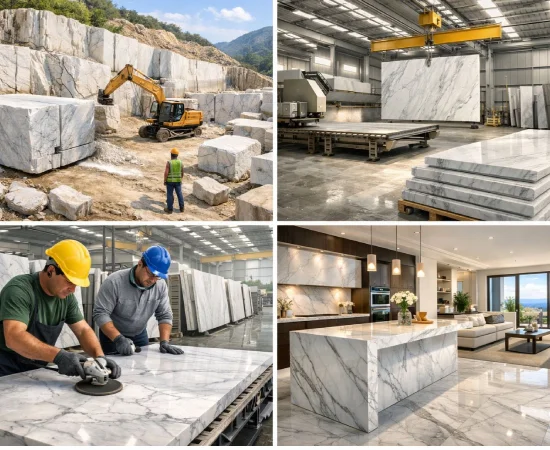
Marble is one of the most admired natural stones in the world. Its elegant veining, luxurious shine, and timeless appeal make it a favorite choice for flooring, walls, countertops, and decorative interiors. But before marble reaches a showroom or becomes part of a beautiful home, it goes through a fascinating journey.
From mountain quarries to cutting factories and polished display halls, every slab of marble passes through multiple stages of extraction, treatment, finishing, and quality checks.
Understanding the marble quarry process helps homeowners, architects, and designers appreciate the craftsmanship behind every piece of natural stone.
In this guide, we’ll walk you through how marble is processed from quarry to showroom, including the marble extraction process, marble manufacturing, and modern natural stone processing techniques.
What is Marble?
Marble is a metamorphic natural stone formed when limestone is exposed to heat and pressure over millions of years. This transformation creates a dense, durable stone with beautiful patterns and unique veins.
Popular marble varieties include:
- Statuario
- Calacatta
- Botticino
- Carrara
- Crema Marfil
- Indian White Marble
Each slab is naturally unique, which is one reason marble remains highly valued.
Step 1: Locating Marble Deposits
The first stage of the marble quarry process begins with geological surveys. Experts study mountains and land formations to identify marble reserves.
They examine:
- Stone quality
- Color consistency
- Veining patterns
- Hardness and density
- Quarry accessibility
Once the deposit is confirmed, quarry planning begins.
Step 2: Marble Extraction Process
After identifying a marble source, extraction starts carefully. Unlike regular mining, marble removal must preserve the stone’s natural beauty and minimize cracks.
Modern Extraction Methods
Today, quarries use advanced machines such as:
- Diamond wire saws
- Chain cutters
- Hydraulic drills
- Controlled splitting tools
These tools cut large marble blocks from the mountain precisely.
Why Careful Extraction Matters
Improper extraction can cause:
- Fractures
- Surface damage
- Uneven blocks
- Material waste
That’s why the marble extraction process requires skill, planning, and advanced equipment.
Step 3: Cutting Marble Blocks at the Quarry
Once separated from the mountain, giant raw marble blocks are shaped into transportable sizes.
Typical block sizes vary depending on:
- Marble type
- Quarry capacity
- Transportation requirements
- Final slab demand
Heavy cranes and loaders move these massive blocks safely.
Some premium marble blocks can weigh several tons.
Step 4: Transporting Blocks to Processing Units
After extraction, marble blocks are transported from quarry sites to manufacturing plants or stone factories.
Transport methods include:
- Heavy-duty trucks
- Flatbed trailers
- Container shipping for exports
Since marble is valuable and heavy, transport must be handled carefully to avoid damage.
Step 5: Marble Manufacturing – Block Cutting Into Slabs
This is where raw stone begins transforming into the polished material seen in showrooms.
At the factory, large marble blocks are cut into slabs using gang saws or multi-wire saw machines.
Common Slab Thicknesses
- 16 mm
- 18 mm
- 20 mm
- Custom thickness for projects
Precision cutting ensures even thickness and maximum yield.
This stage is a major part of marble manufacturing.
Step 6: Resin Filling and Surface Treatment
Natural marble may contain tiny pores, pinholes, or minor cracks. To improve strength and finish, slabs often undergo resin treatment.
How It Works
- Slabs are cleaned thoroughly
- Special resin is applied
- Resin fills micro gaps
- Slabs are cured and hardened
Benefits include:
- Better durability
- Improved shine
- Smoother surface
- Enhanced visual appearance
Step 7: Polishing the Marble Surface
Polishing brings marble to life. This stage reveals the natural color depth and veining hidden in the rough-cut slab.
Machines use abrasive pads in multiple stages, gradually creating a glossy finish.
Finish Options
Polished Finish
- High shine
- Luxurious appearance
- Excellent light reflection
Honed Finish
- Smooth matte look
- Soft modern feel
Leathered or Textured Finish
- Decorative finish with tactile surface
Polishing is one of the most important steps in natural stone processing.
Step 8: Quality Inspection
Before marble reaches the market, each slab is inspected carefully.
Quality checks include:
- Surface finish consistency
- Crack detection
- Color tone matching
- Thickness accuracy
- Edge condition
- Structural soundness
Premium marble suppliers often grade slabs based on visual beauty and quality.
Step 9: Cutting for Custom Applications
Some slabs are sold full-size, while others are cut for specific uses.
Examples:
- Flooring tiles
- Stair treads
- Kitchen countertops
- Vanity tops
- Wall cladding panels
- Tabletops
Modern CNC machines allow precise cutting for custom projects.
Step 10: Packing and Showroom Display
Once finished, slabs are packed securely using wooden crates, foam supports, and protective wrapping.
At the showroom, marble is displayed vertically or in designer mockups so customers can appreciate:
- Full slab veining
- Color consistency
- Finish quality
- Design possibilities
This final stage completes the journey from mountain quarry to luxury showroom.
Why Every Marble Slab is Unique
Unlike manufactured tiles, marble is created by nature. No two slabs are identical.
Variations may include:
- Vein movement
- Shade depth
- Pattern flow
- Mineral textures
This uniqueness is exactly what makes marble so desirable.
Technology Has Improved the Marble Quarry Process
Modern equipment has transformed the industry by improving:
- Precision cutting
- Worker safety
- Faster production
- Reduced waste
- Better slab quality
- Cleaner finishes
Advanced machinery helps preserve marble’s beauty while increasing efficiency.
Sustainability in Marble Processing
Responsible suppliers now focus on eco-friendly methods such as:
- Water recycling in factories
- Waste stone reuse
- Efficient block cutting
- Dust control systems
- Long-lasting durable products
Natural marble remains a sustainable premium material when sourced responsibly.
How Buyers Can Choose Quality Marble
When shopping in a showroom, inspect:
- Natural veining appeal
- Smooth polished finish
- Thickness consistency
- Minimal cracks or repairs
- Proper sealing recommendations
- Trusted supplier reputation
Understanding the marble quarry process helps buyers make smarter decisions.
Why Marble Costs Vary
Price differences depend on:
- Quarry location
- Rarity of marble type
- Extraction difficulty
- Slab size
- Processing quality
- Imported vs domestic origin
Italian marbles like Statuario and Calacatta often command premium prices due to rarity and prestige.
Final Thoughts
The journey of marble from quarry to showroom is a remarkable blend of nature, engineering, and craftsmanship. What begins as raw stone deep within the earth becomes a polished masterpiece ready to transform homes and commercial spaces.
From the marble extraction process to precision cutting, polishing, and display, every stage adds value and beauty.
The next time you see a marble slab in a showroom, remember—you’re looking at millions of years of natural formation refined through expert marble manufacturing and world-class natural stone processing.
Experience Premium Marble With Adi Marble
At Adi Marble, we don’t just supply stone—we craft experiences. With our carefully curated collection of the finest Italian marbles like Statuario, Calacatta, Botticino, and more, we help you design spaces that speak volumes. From residential elegance to commercial grandeur, our team of experts walks with you through every step—from selection to seamless installation—ensuring your project shines with unmatched luxury and style.
📍 Visit Us: Chintamani Park Road, Borate Vasti, Tukaram Nagar, Kharadi, Pune, Maharashtra 411014
📞 Call Us: +91-9168633149
🌐 Explore More: https://adimarble.in
👉 Step into a world of elegance. Step into Adi Marble.